Bài viết bên dưới được đăng bằng tiếng Anh. Mọi con số trong đó là con số do chính nhà cung cấp công bố, kèm ngày chúng tôi đọc được.
Synthesia sells one thing: a script goes in, a video of a presenter delivering it comes out. That narrowness is the most useful fact about it.
What the plans actually publish
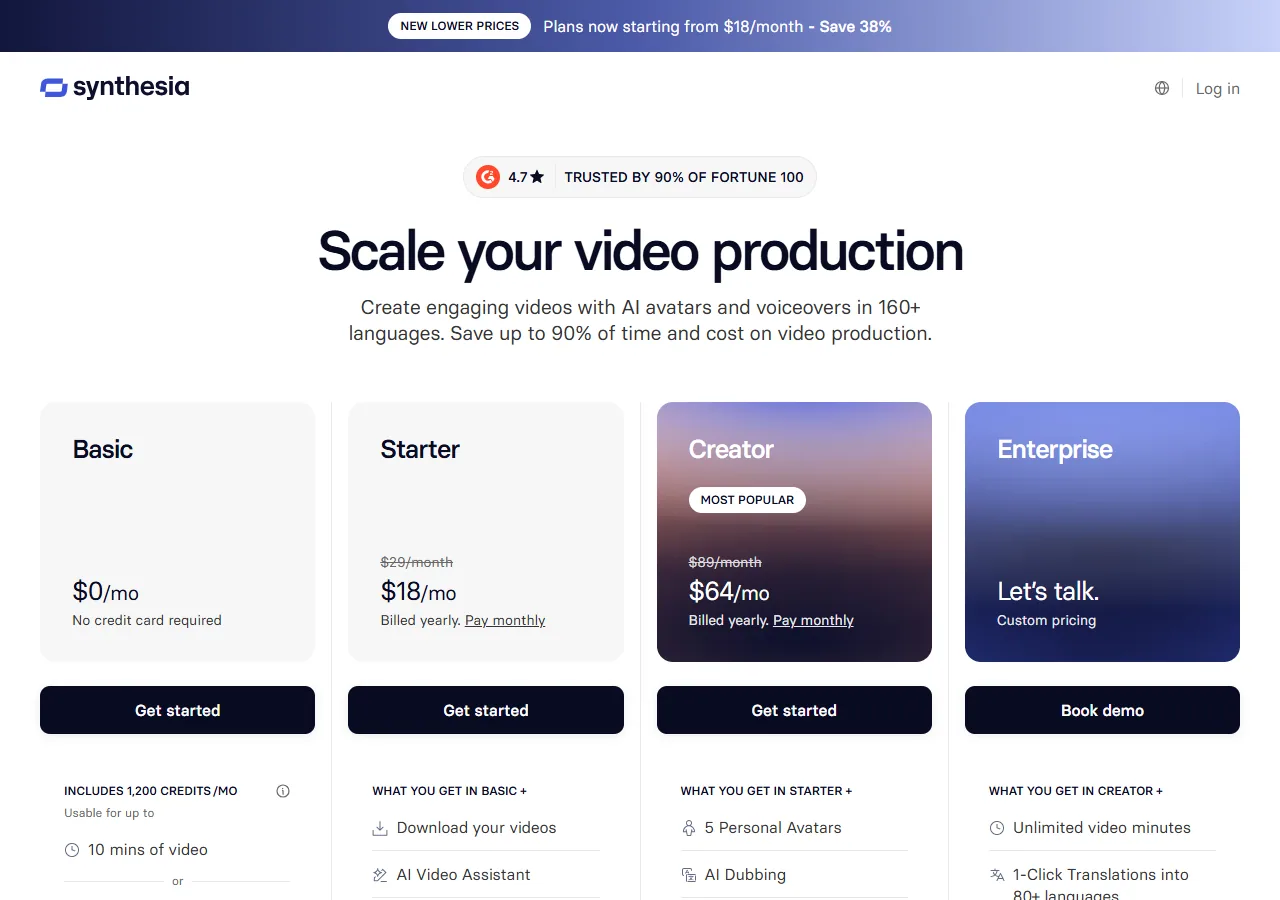
The figures above are read from Synthesia's own pricing page on the date shown, and the full list with links is at the bottom of this page. Two of them are worth reading together: the free plan grants 1,200 credits a month, and the same card translates that into up to ten minutes of video a month, or ten minutes of AI dubbing, or 25 AI-generated video assets.
The field splits on that translation. Descript also denominates a free tier in time; HeyGen meters a count of clips with a one-minute ceiling on each; Runway and Pika publish credits. A credit is a unit only the vendor understands. A minute of finished video is a unit the person who asked you for the video understands, and being able to hand a free-tier output to that person is the difference between an evaluation and a demo. The Synthesia versus HeyGen comparison lines up the two that meter differently.
Where the pricing gets slippery
The Starter card displays a lower figure when the annual toggle is selected, and the toggle state is not always obvious at a glance. The number in the table above is the one shown for monthly billing. If you are budgeting from a screenshot somebody sent you, check which toggle was active when it was taken.
The watermark on the free plan
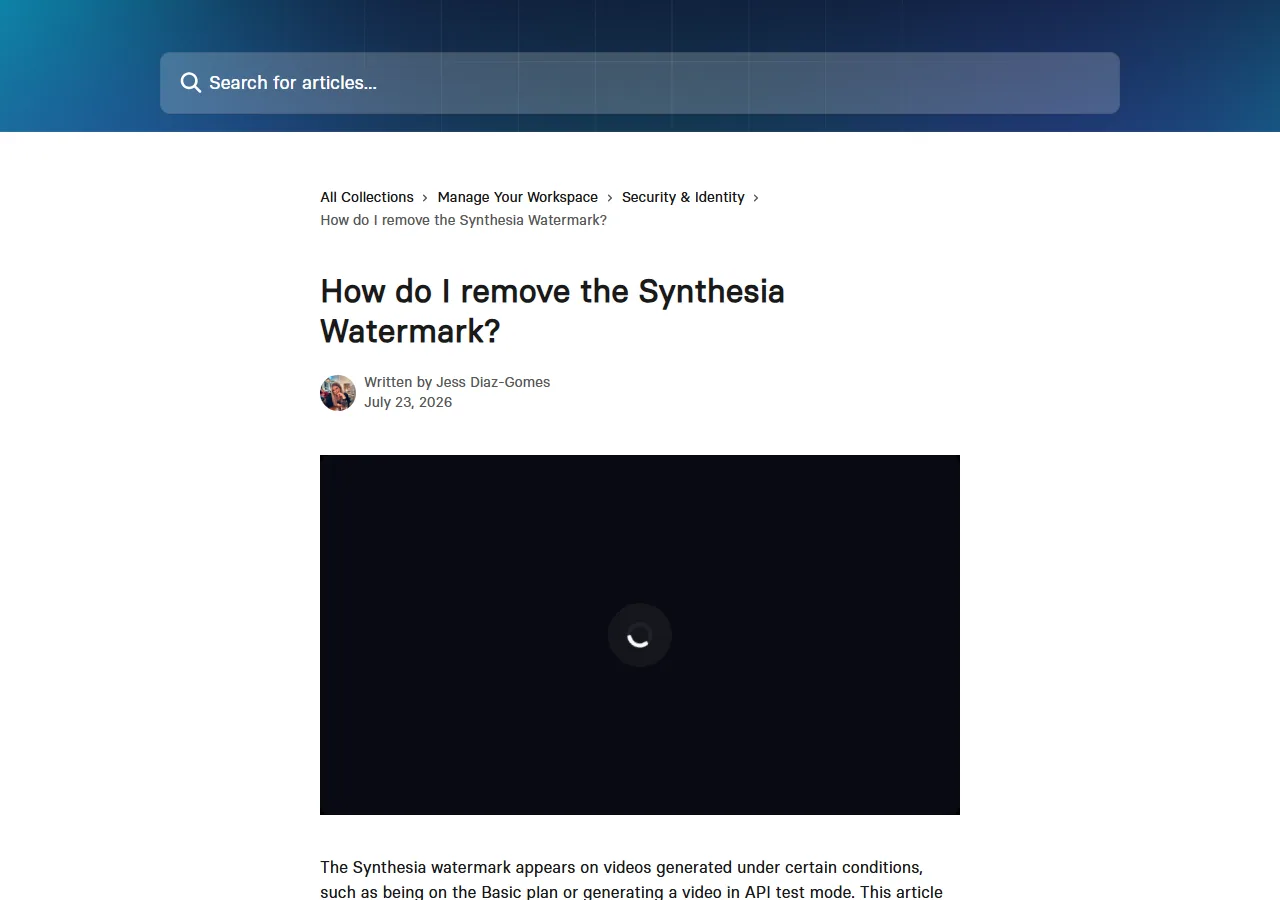
There is a boundary on the free plan that the pricing page does not announce in the same breath as the allowance. The help center states it plainly: the Synthesia logo appears on all videos created on the Basic plan, and the only way to remove it is to upgrade your plan and regenerate the video. The read of the free tier changes with that sentence. Ten minutes a month is enough to build a genuine first module and show it to the people who would sign it off, which is the actual test for this category. What a free-tier result is not is the asset you ship, because the watermark stays on it until you pay.
That is a different shape from HeyGen's free tier, whose output is licensed for personal evaluation only and cannot be shipped at all. Synthesia's free output is the real video, watermarked; HeyGen's is a license constraint instead. Both are evaluations, neither is a deliverable, and the comparison page weighs the two ceilings side by side.
Who owns what you make
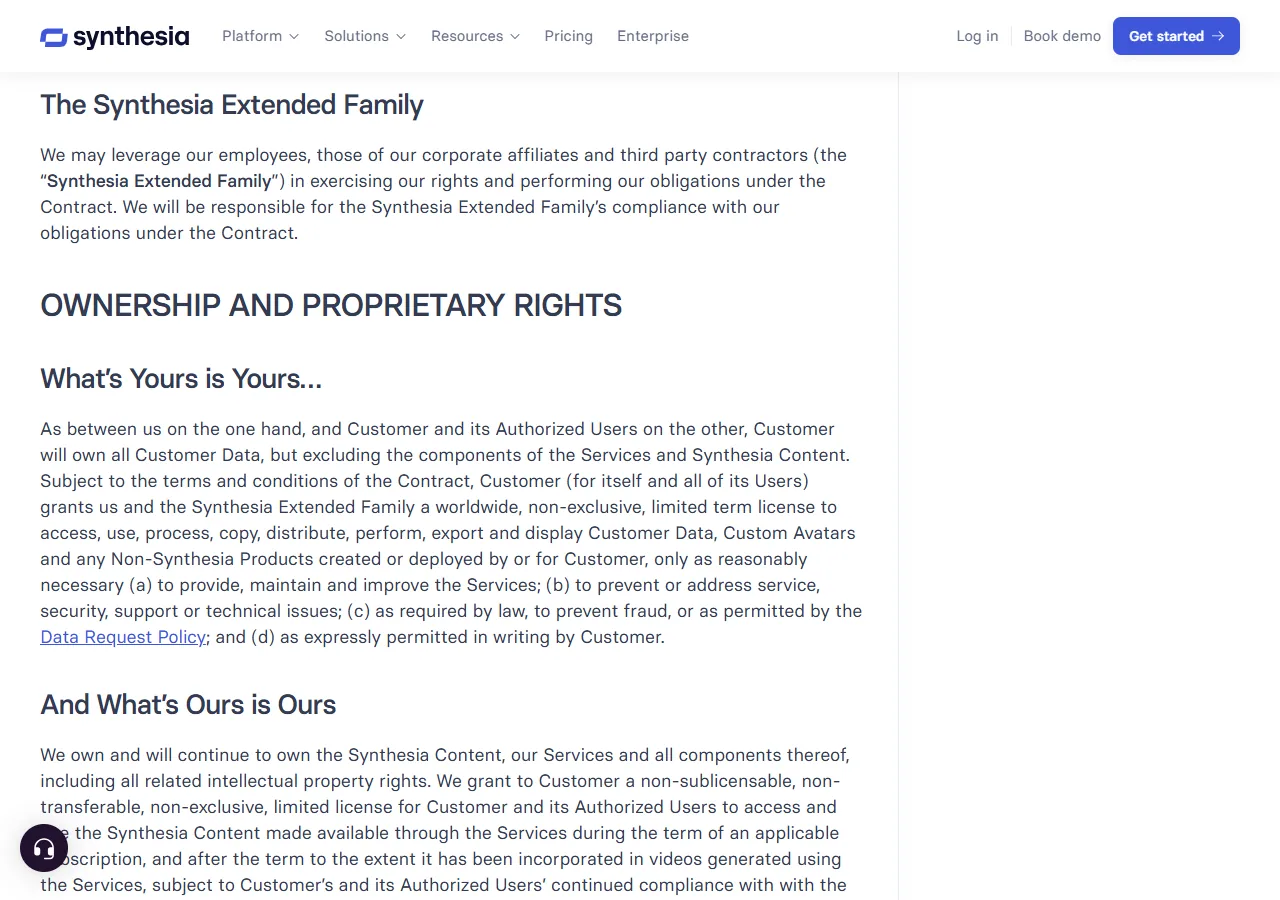
The ownership question has a clean answer, and it is in the Customer Terms of Service rather than on the pricing page. The section titled "What's Yours is Yours" states that the customer owns all Customer Data, and then grants Synthesia a worldwide, non-exclusive, limited term license to access, use, process and display that data only as reasonably necessary to provide, maintain and improve the services, address service or security issues, comply with law, or as expressly permitted in writing by the customer. The ownership sentence comes first, and the license is drawn around the reasons Synthesia needs the data to run the service, not around a permanent right to it.
What the terms do not say is also a fact worth having: Synthesia does not claim a broader license over your input or output in the customer terms, and there is no clause that turns free-tier work into a different ownership situation. The Acceptable Use Policy does require that you use the services for your organization's or company's business needs rather than for consumer, personal or household purposes.
What the data rules are
The privacy policy keeps the distinction between Customer Data and usage information. Synthesia is the processor of Customer Data, which the customer controls, and retains it in accordance with the customer's instructions and as required by applicable law. The Customer Terms add a separate sentence about the artificial intelligence components: when an authorized user uses the services, Synthesia may generate and analyze usage information to improve the services, and the terms state that in no event will that use result in the improvement or fine tuning of artificial intelligence components unless integrated with the services being used by the customer, or the creation of models provisioned independently of the services.
For a buyer that is the material half of the training question: the videos you generate and the scripts you feed in are your data under your control, and the model work Synthesia does on them is scoped to the services you are using. What the documents do not contain is an in-product training opt-out of the kind some competitors publish; the privacy policy states legitimate interests for improving the platform and enhancing models, and leaves the retention of Customer Data to your instructions.
Who should not buy this
If you need generated footage of a scene rather than a person reading a script, Synthesia is the wrong tool and no amount of prompting will change that. It is a category boundary, not a limitation, and the vendor is clear about it. The Synthesia tool profile carries the same figures with the same dates, and AI avatars is where this purchase sits next to its closest alternatives.
If you are iterating heavily, ten minutes a month will not survive the drafting phase. That is an argument for starting on the free tier and moving up quickly, not an argument against the product.
What this review does not tell you
Nothing here is a judgment of output quality. We do not generate footage and score it, and we have not found an independent benchmark of avatar realism that we would be willing to rank on. What we can tell you is what the plans commit to in writing, which is checkable, and where the product's edges are.